In the AI Investment Brief today: Early AI adopters report gains, plus CoreWeave's bond woes Trump’s first major tariffs were introduced in January 2018 – a (very) long eight years ago. The first China-specific ones, in July that year. The aims were multiple: to reduce the bilateral deficit (which in 2017 stood at 375 billion dollars with China, nearly half of America’s goods deficit of $792 billion), target intellectual property theft and counter Chinese policies that favored domestic companies; and improve the US leverage by reducing its dependency on China. On paper, some of that worked. But look closer, and you see that China didn’t disappear. Supply chains got a remapping instead. Today’s Monday Data looks at what eight years of tariffs have really achieved. Mind the label
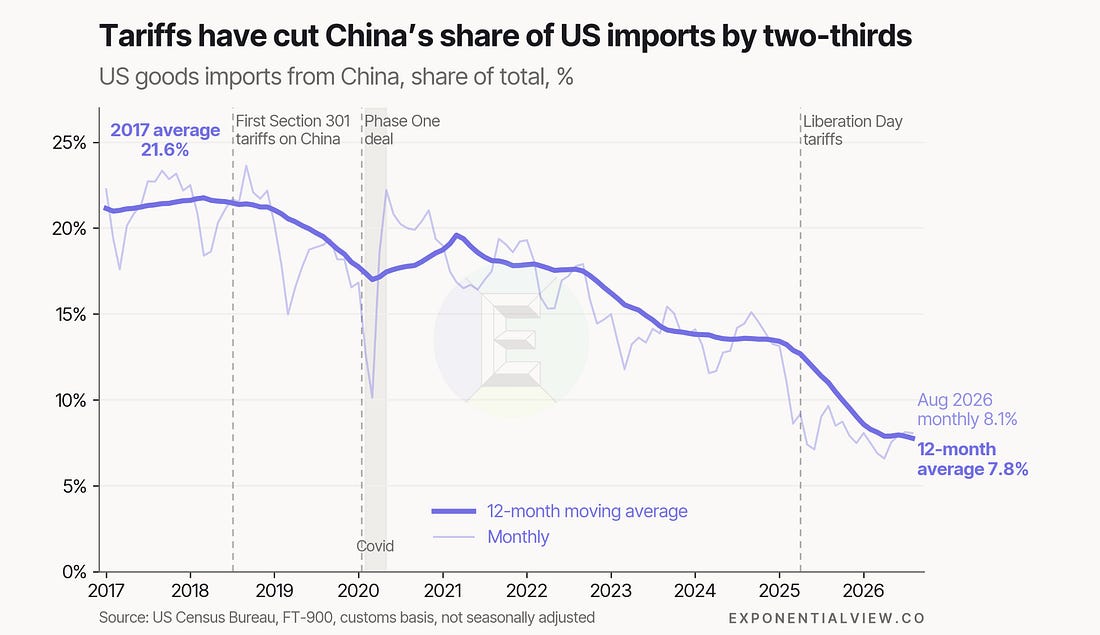
The immediate impact of tariffs on China was a drop in the share of US imports from China. In the mid 2010s, the share of goods imports was around 21%¹. By this summer, it had plateaued at around 8%.
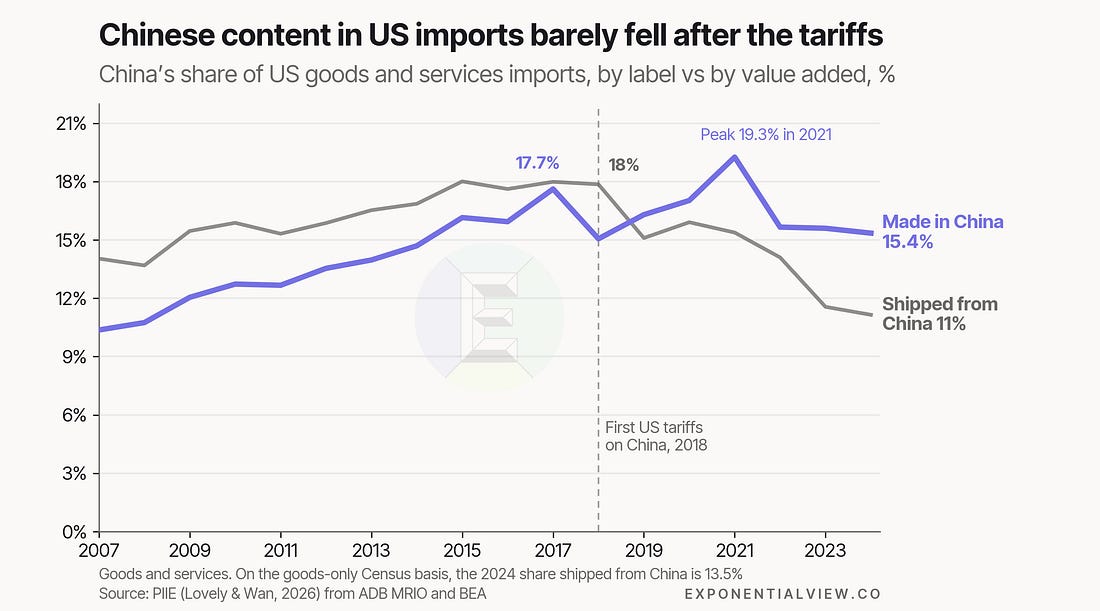
The Chinese engineering state found a way around it — tariff-jumping investments, i.e., relocating production to other countries. A product made in Vietnam or Mexico can reach the US as that country’s export, even if the factory, or the parts that went into making it, are Chinese. Chinese-owned factories shipped 25% of Vietnam’s exports to the US between 2020 and 2023, up from 11% in 2018-19 – imports that don’t carry a “Made in China” label. Chinese imports have dropped, but China’s supply-chain impact remains strong.
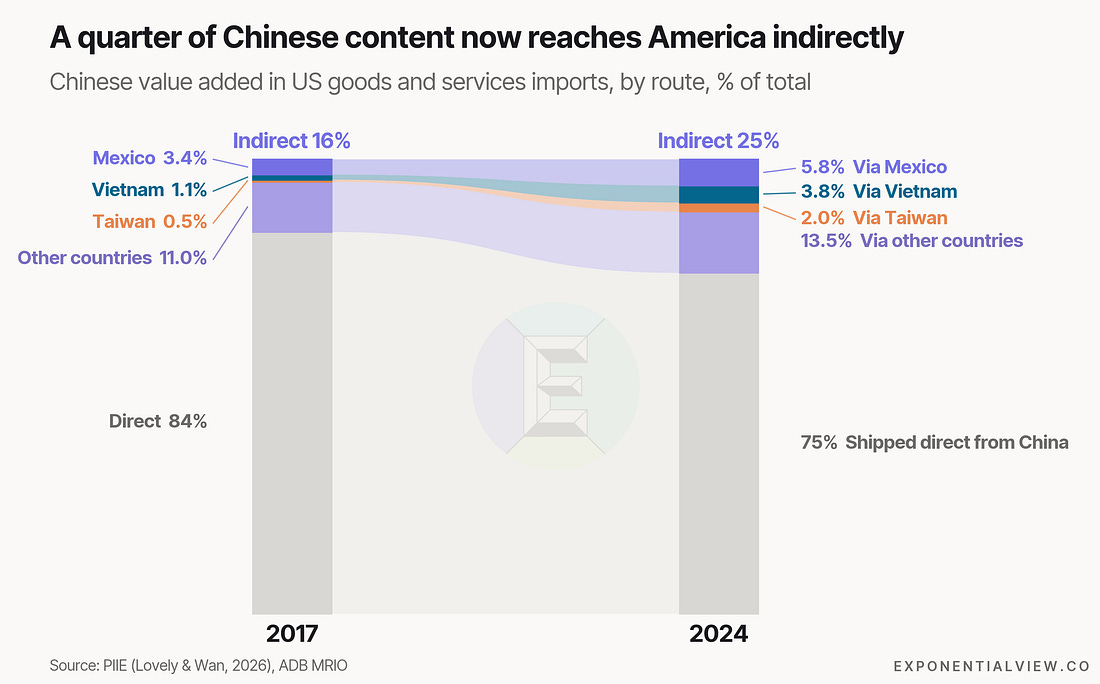
In fact, the share of Chinese value added in US imports that arrived directly from China dropped from 84% to 75% over 7 years, while the share arriving via Vietnam more than tripled.
The export machine is fine...Continue reading this post for free in the Substack app
|